S1
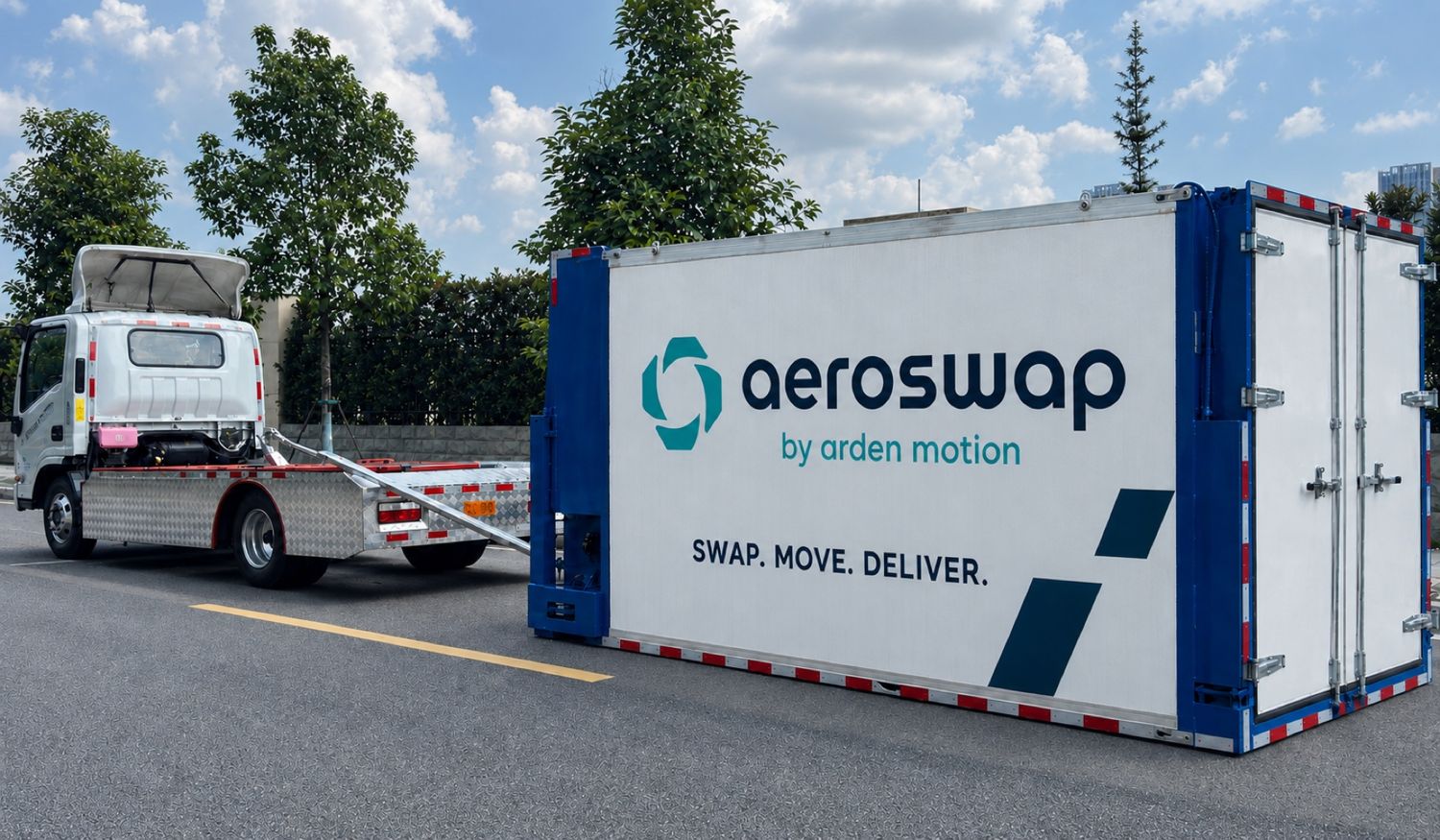
One large moduleHeavy, high-volume drops. Doubles as a ground-level store or site container.
- Module (L×W×H)
- 4,100 × 2,200 × 2,180 mm
- Lift capacity
- 6,000 kg
- Module payload / tare
- 5,000 / 1,100 kg
- Drop / load cycle
- 60 / 90 s
- Upper structure
- 524 kg
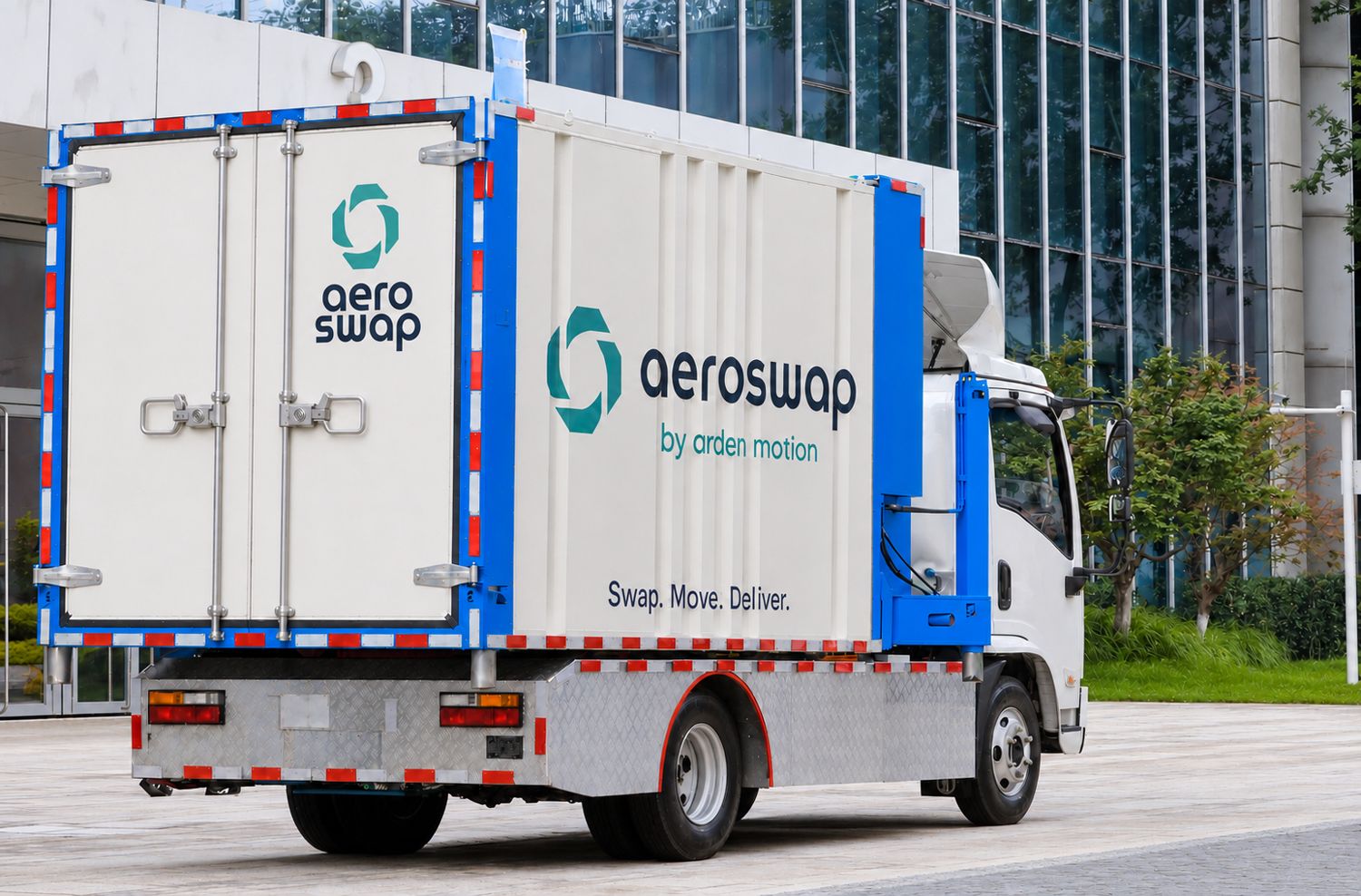
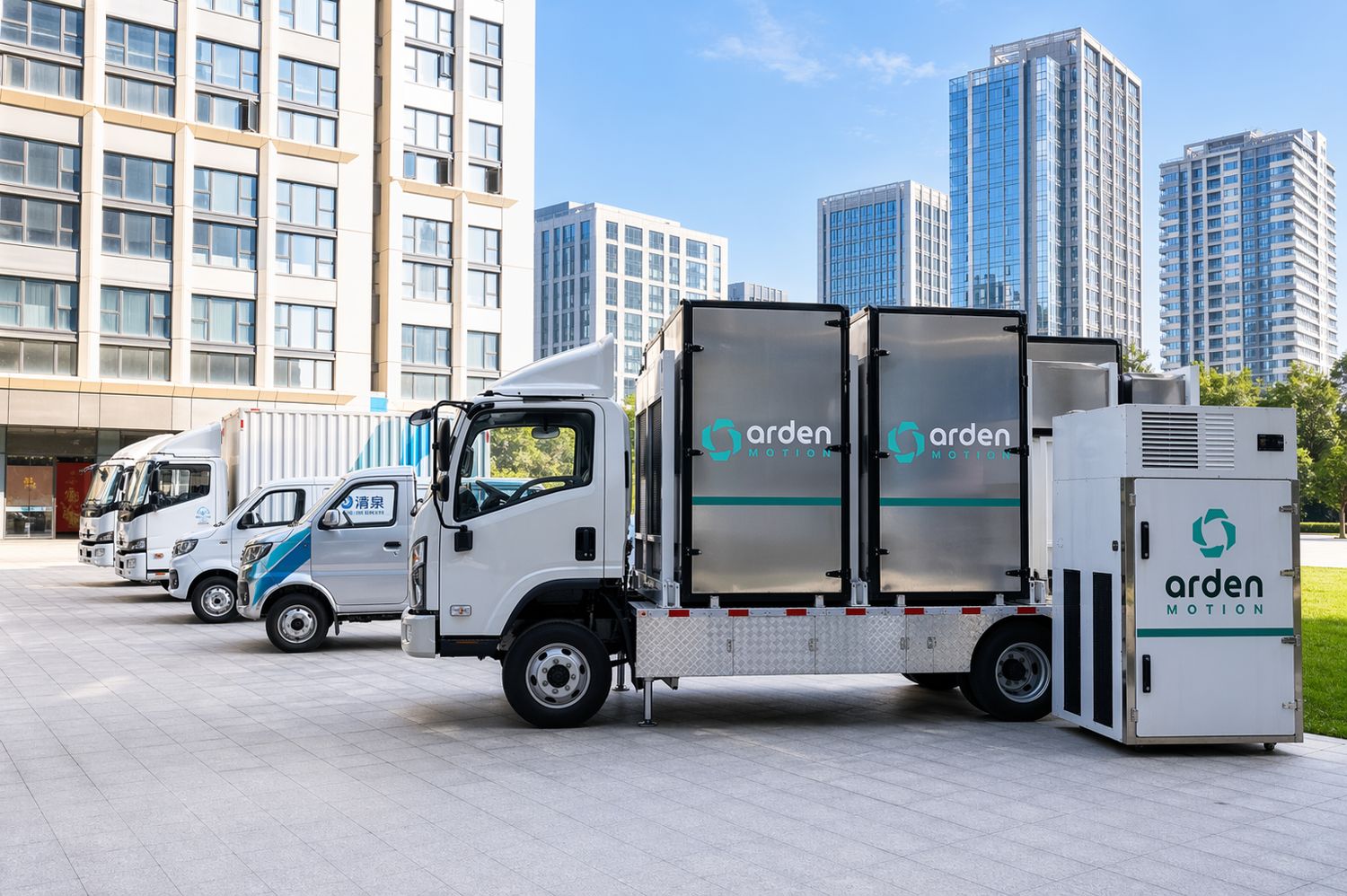
Aeroswap is an electric light truck that sets down and picks up its own sealed, tracked cargo modules in about a minute, with no forklift, dock or tail-lift. Loading happens while the vehicle is already on its next job.
In a conventional round the van sits idle while it is loaded and unloaded. Aeroswap separates the two. Modules are packed in advance, dropped where they are needed and collected later, so the vehicle only spends time driving.
Modules are loaded at the hub or by the customer before the truck arrives.
The onboard lift hooks, raises and locks each module to the chassis. One operator, one remote command.
At the destination the module is lowered to the ground and stays as secure, standalone space.
The truck leaves for its next job and swaps in a full or empty module on the way back.
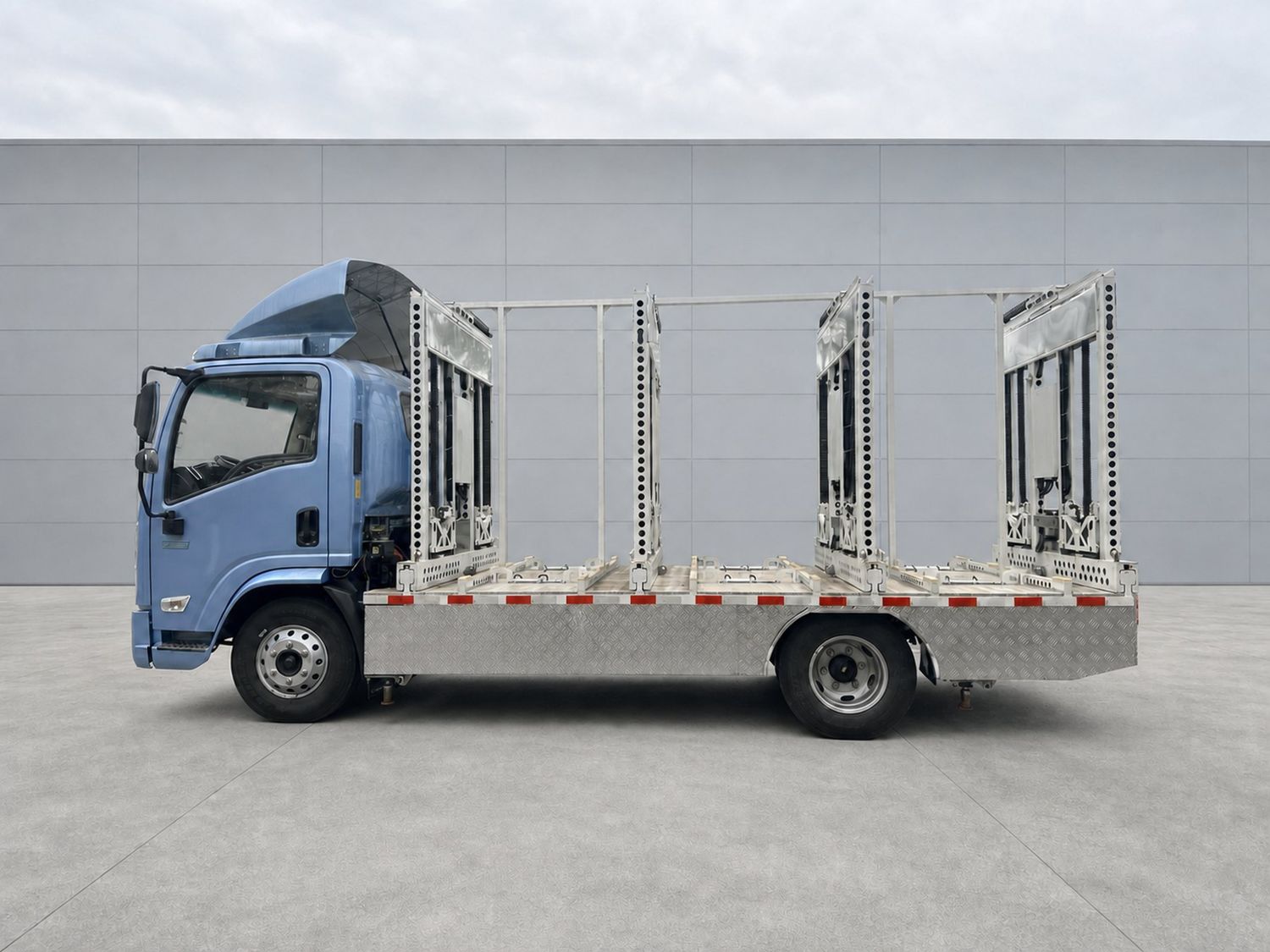
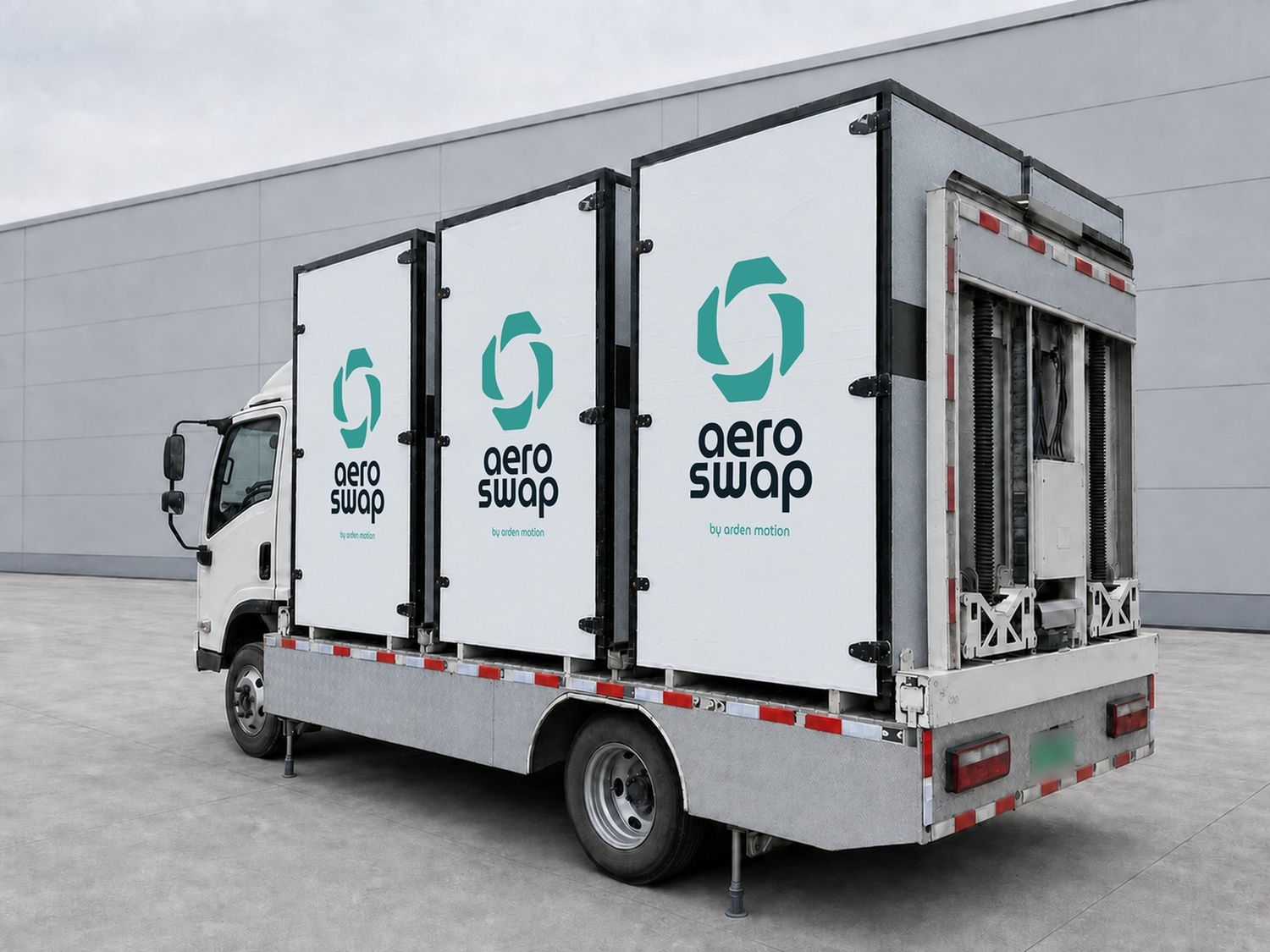
All three are built on a 4.2 m class electric light-truck chassis. Choose by how large each drop is and how often the vehicle stops.
Heavy, high-volume drops. Doubles as a ground-level store or site container.
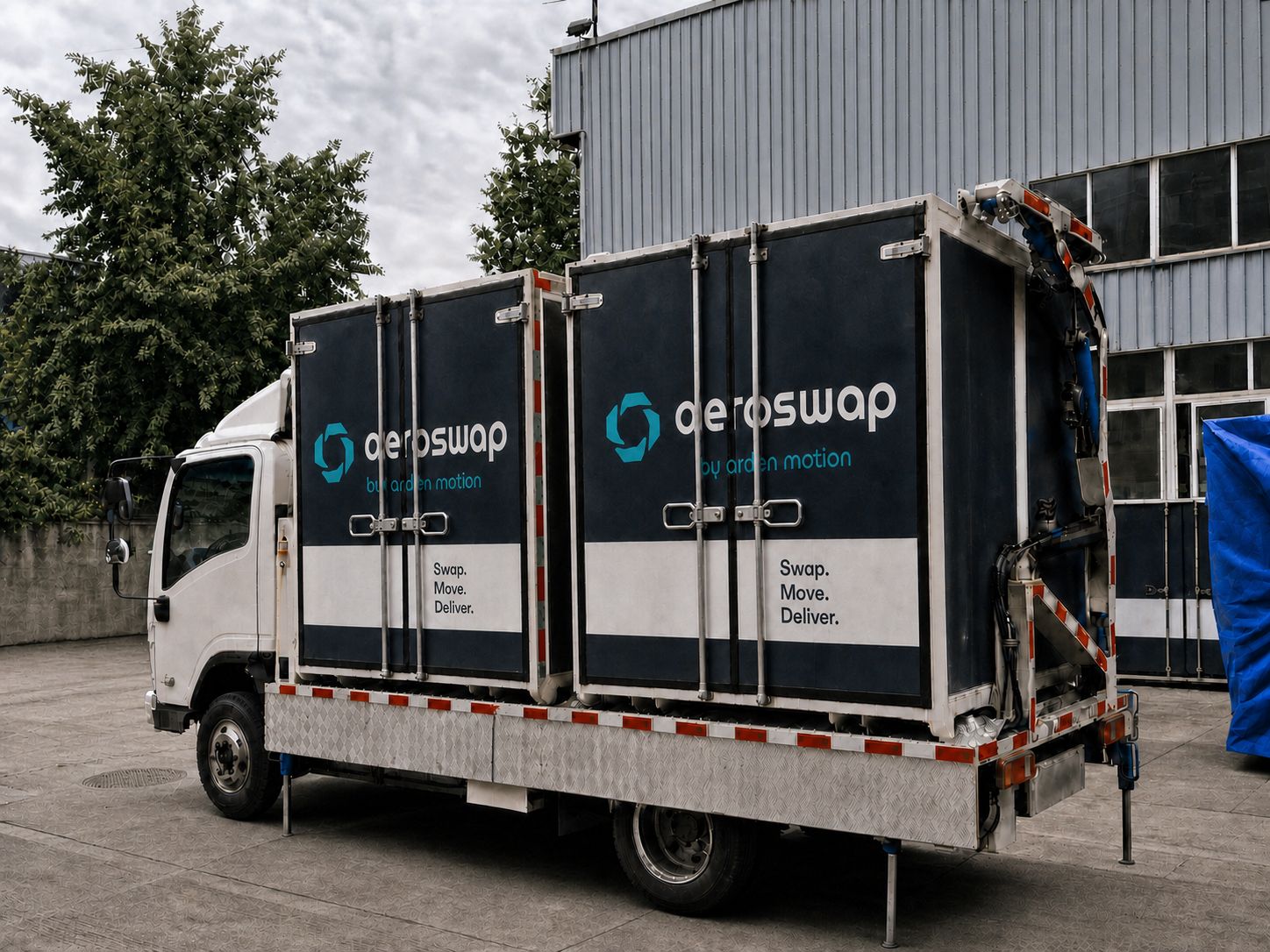
Steady volumes across linked stops. Dry, chilled and specialist variants.
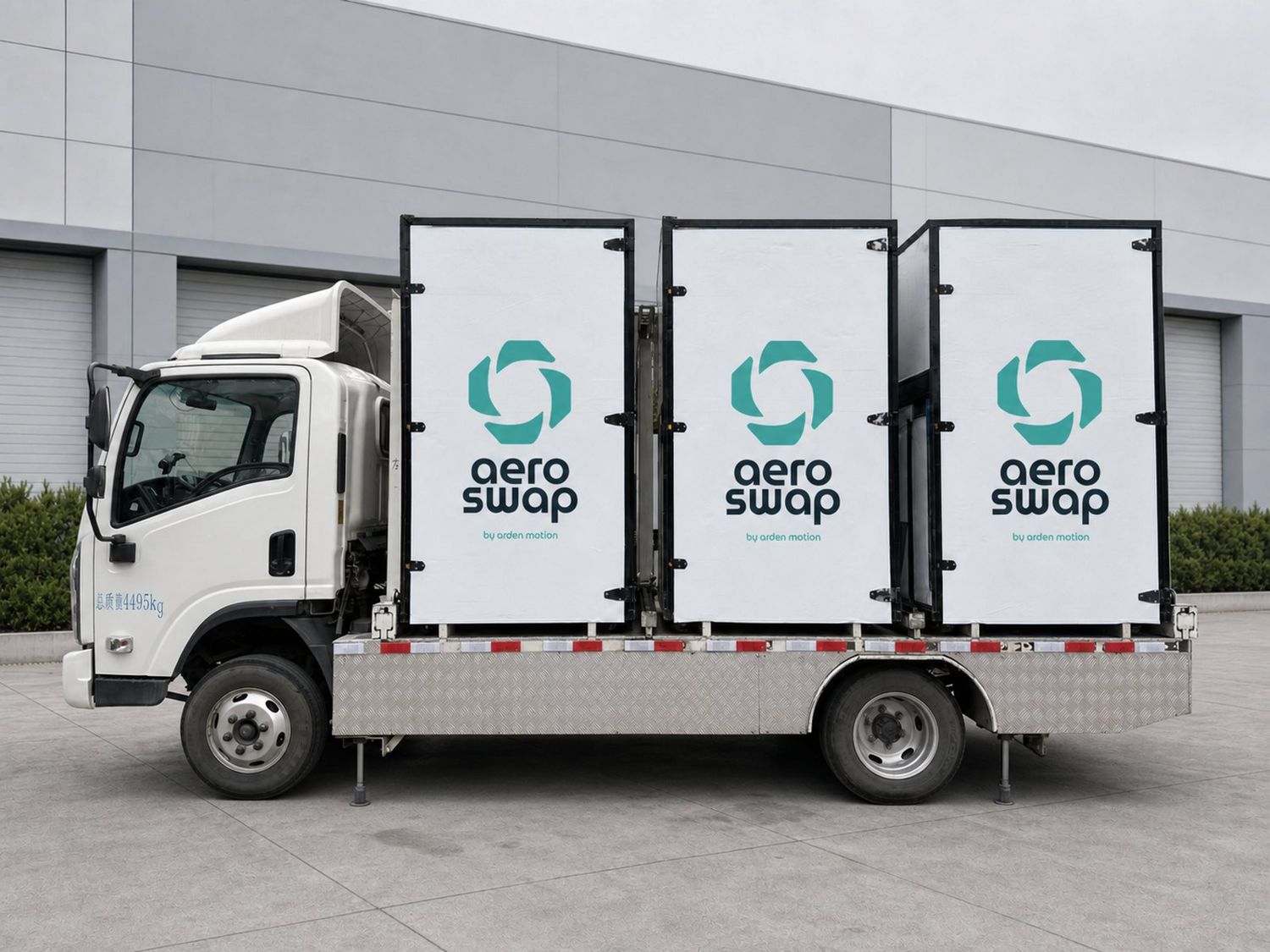
Frequent stops, small and mixed loads. Each module is sized like a roll cage.
Reference figures from current production vehicles. Payload shown for general-purpose modules. UK vehicle weights, licence category and net payload are being confirmed for right-hand-drive homologation.
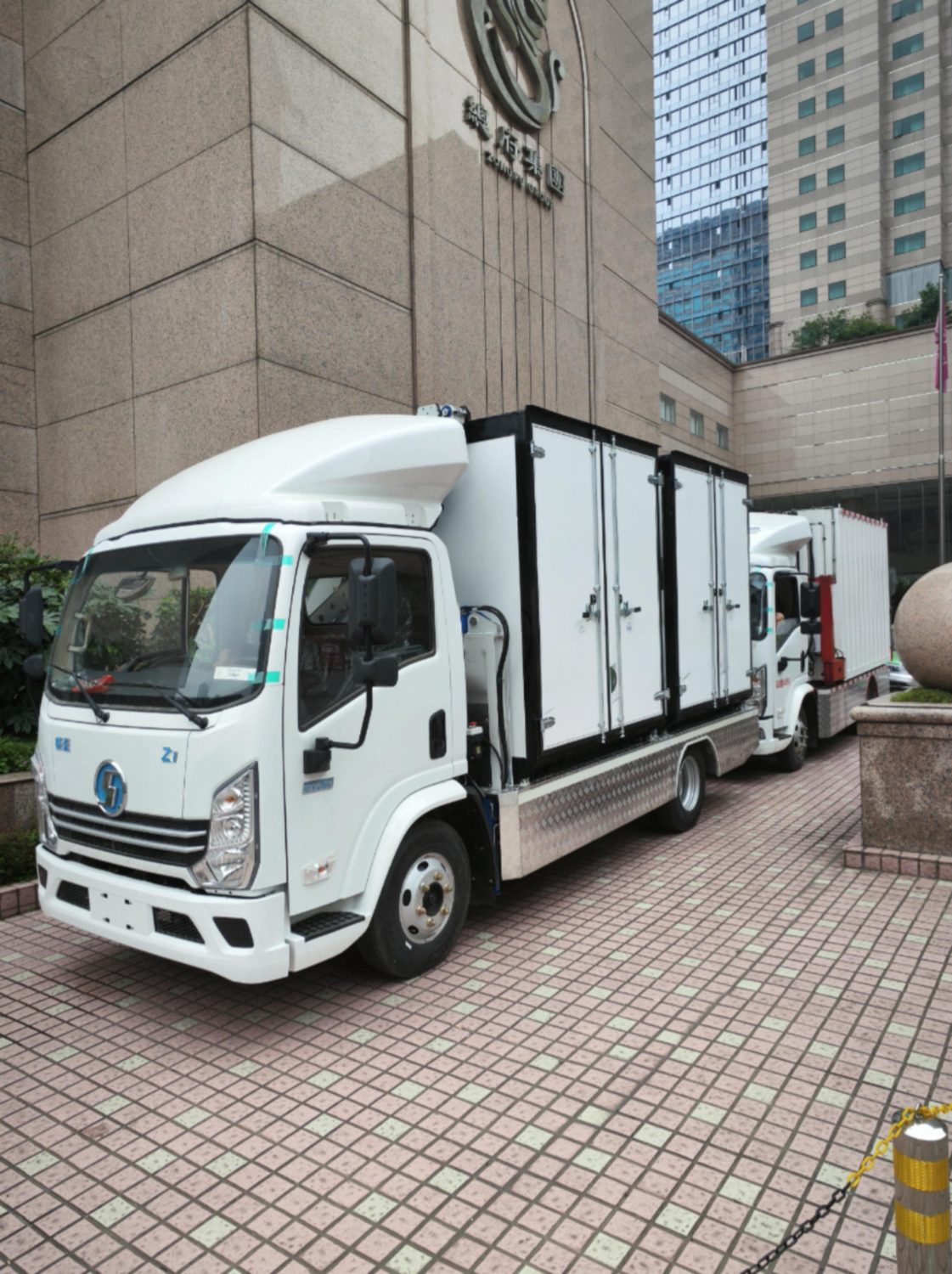
Every module is a closed box with its own identity. It can travel, wait on site or be stored, and the operator always knows where it is and who opened it.
Solid walls and electric door locks instead of open cage mesh.
Built-in NB-IoT and GPS report location and status in real time.
Load, temperature and door sensors connect through the same module.
Every drop, collection and door opening is logged against the module.
The same truck-and-module system adapts to very different operations. Self storage leads our UK launch. Parcel delivery and cold chain are already in daily service in China, and the rest are open for pilots.
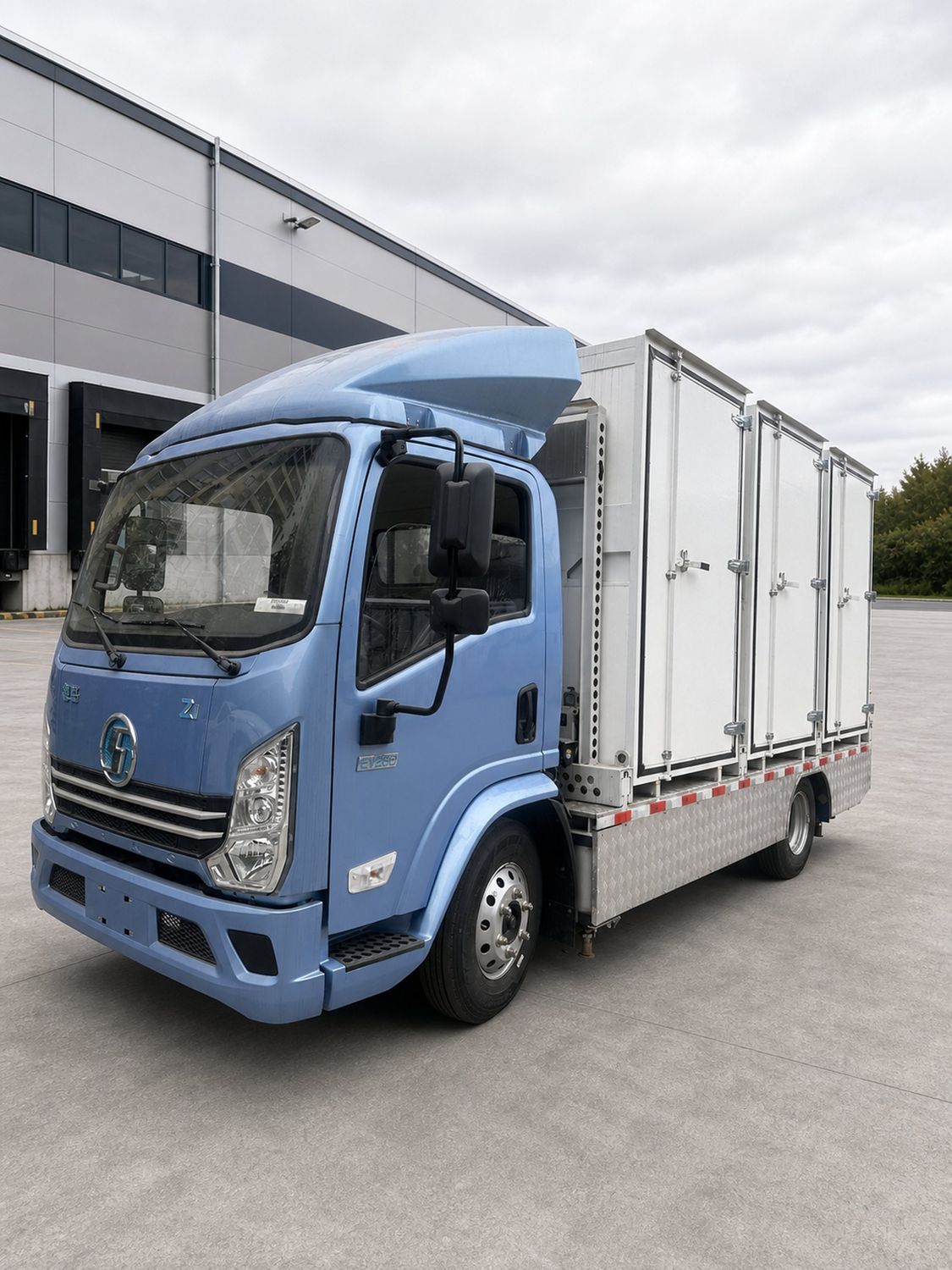
The UK has around 3,100 self-storage stores, 76% of customers are households, and lack of space at home is the top reason they rent. Aeroswap brings the unit to the customer instead.
Temperature-controlled modules hold −20 to 12 °C and plug into mains power when set down, so the cold chain holds from depot to door.
Modules are pre-loaded at the hub and dropped at delivery stations, so couriers start their rounds earlier.
Temperature-controlled modules hold −20 to 12 °C and plug into mains when set down, so the chill chain never breaks.
A module parked near a cluster of online sellers becomes a forward pickup store. In China this cut loading from 120 to 30 minutes.
Meals are sealed into modules at the kitchen and delivered to schools, hospitals and staff canteens with a full temperature record.
Stock arrives in a locked module overnight and is unpacked by store staff when they are ready, without a driver waiting.
A large module brings materials or tools to site, stays as a secure store and is swapped for the next phase.
Bar stock, kit and generators arrive in modules, sit backstage for the event and leave in one collection.
Supplies, linen and student move-in storage circulate between a central store and many buildings on a fixed timetable.
Spares and tools are pre-positioned near job clusters, so engineers collect parts nearby instead of returning to depot.
Pre-cooling at the farm gate and a live-tank module with oxygen and temperature sensors for seafood.
Doorstep collection, resident storage for flats and Build to Rent, and overflow capacity for existing operators.
Swappable battery modules for light, short-duration loads such as site cabins, lighting and small event stages.
The Aeroswap system is already in daily service with national parcel carriers in China. These results come from live routes.
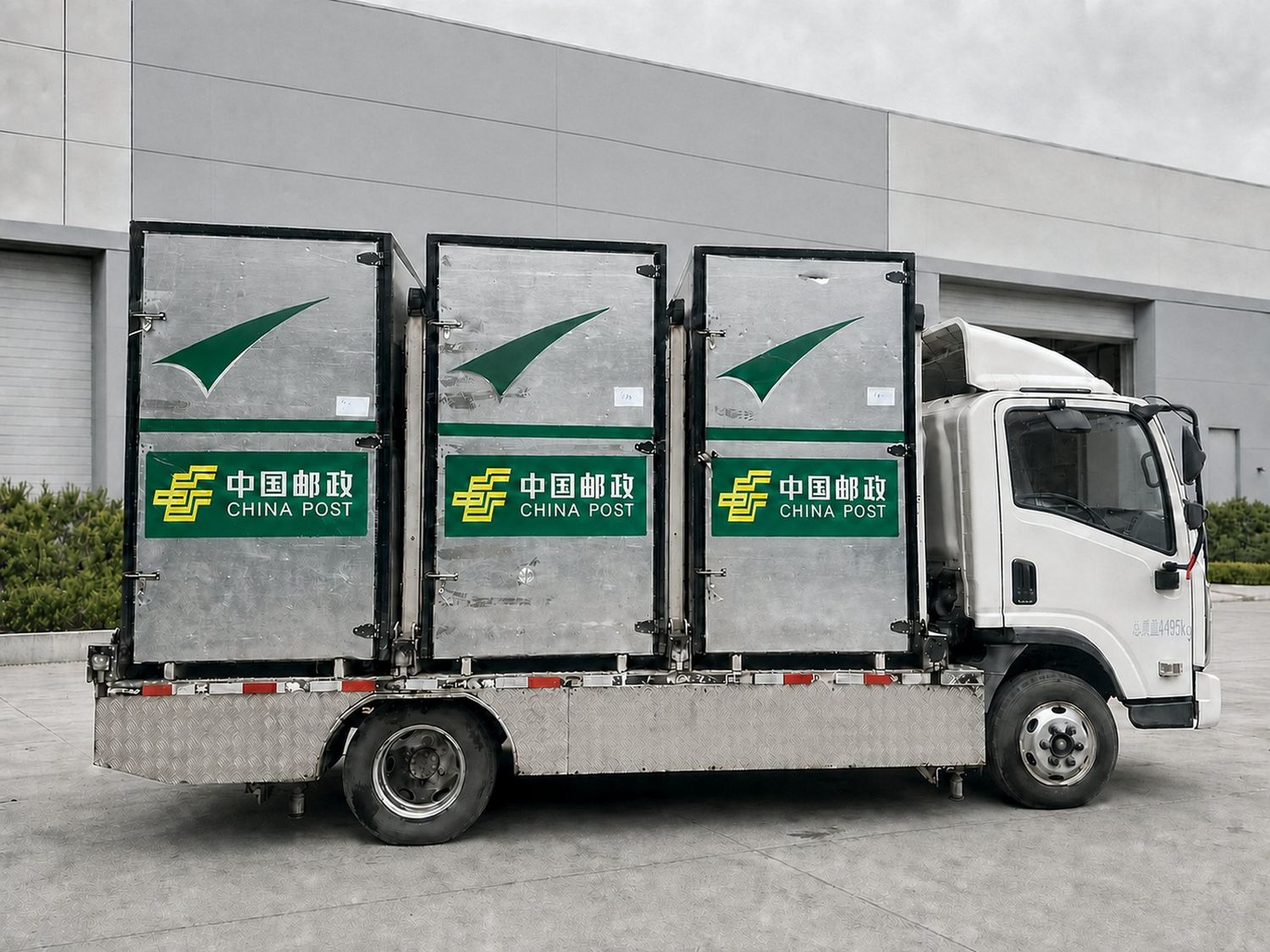
| Measure | Before | With Aeroswap |
|---|---|---|
| Vehicles per route | 1.5 | 1 |
| First dispatch | 9:00 | 8:00 |
| Delivery efficiency | — | +30% |
| Freight cost per parcel | — | −30% |
Parcels reach customers about two hours earlier.
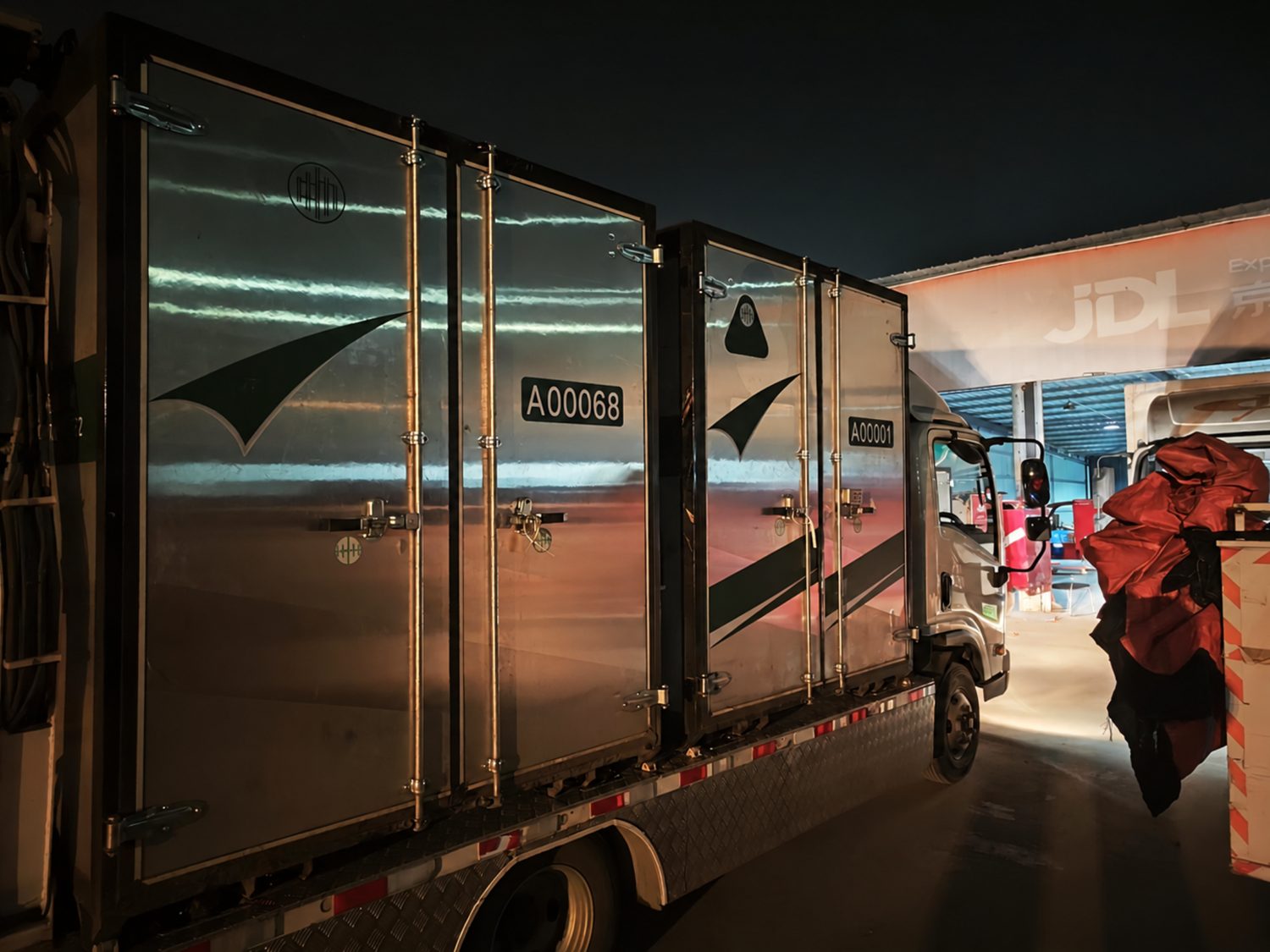
| Measure | Before | With Aeroswap |
|---|---|---|
| Vehicles per route | 2.5 | 1 |
| Hub floor space used | 100% | 50% |
| Re-loading cost per vehicle | ¥20–22 | ¥5 |
| Delivery efficiency | — | +20% |
Station transport cost down 10% on live sites so far.
Operating data from routes in China. Much of the gain comes from running more, smaller drop points per route, which the module makes practical. UK results will depend on each operator's own baseline, which we measure together during a pilot.
The Aeroswap system has served




Aeroswap is coming to the UK. We configure the vehicle and modules for your operation, run a contained pilot, and expand only where the data supports it.
Pick the operation, drop points, module size and service frequency.
Confirm vehicle, module fit-out, locks, sensors and site access.
Run one route and measure cycle time, utilisation, stops per hour and cost per drop.
Add modules, vehicles and partner sites where density supports it.
We are selecting first UK pilot partners in self storage, cold chain and urban delivery. Share your operation and we will come back with a module plan and a pilot scope.